How to choose a network when transferring cryptocurrency: fees, speed, and common mistakes
Withdrawal network is not the cheaper the better, the correct principle is that the receiving end supports the same network, and the sending end chooses the same network. The currency, network, address, and Memo must match at the same time; if both ends support multiple networks, then choose the one with lower cost based on withdrawal fee, arrival speed, and minimum recharge amount.
What does withdrawal network mean?
The withdrawal network is the blockchain where cryptocurrency is actually transferred on the chain. The same asset in the exchange may support multiple networks at the same time.
Taking USDT as an example, common versions include:
- ERC20 USDT on the Ethereum network.
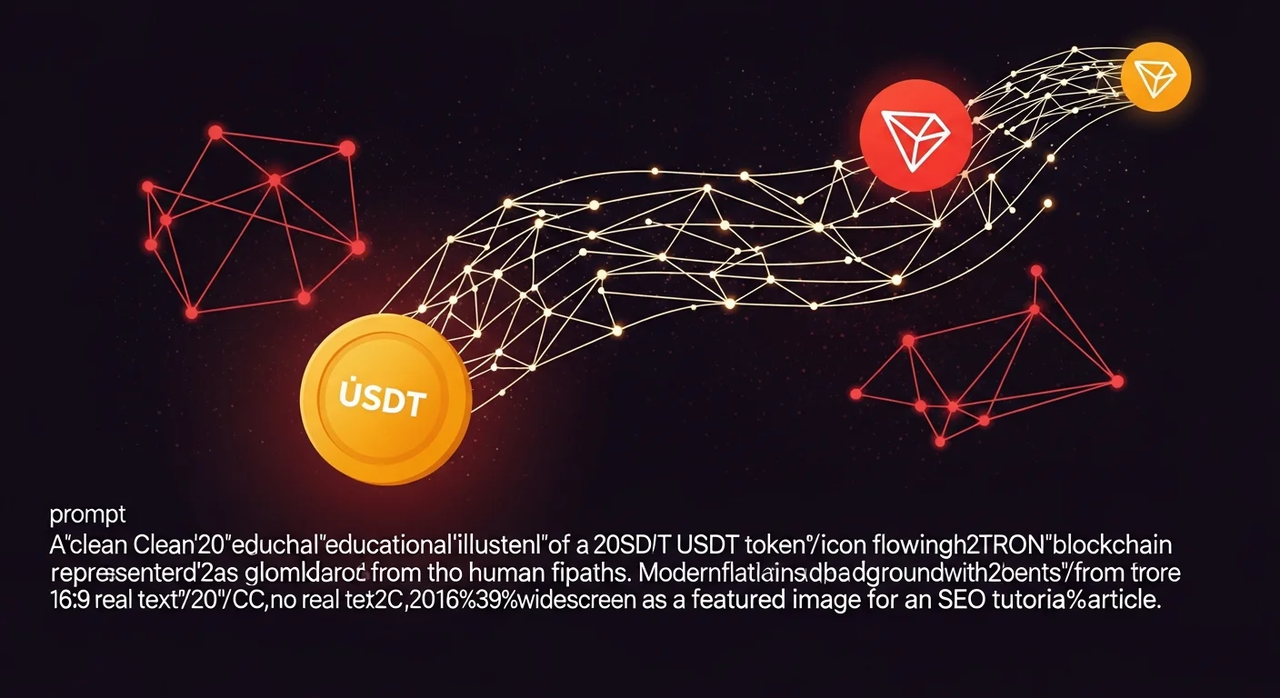
- TRC20 USDT on the TRON network;
- BEP20 USDT on BNB Smart Chain.
- USDT on Solana network;
- USDT on the TON network.
The prices of these assets are usually pegged to the US dollar, but they exist on different blockchains and cannot be chosen randomly just because they are all named USDT.
The correct withdrawal relationship is:
Sending currency = Receiving currency
Sending network = receiving network
Withdrawal address = recharge address
Memo or Tag = Receive information displayed on the page
If the receiving exchange generates a USDT-TRC20 address, the sender must also select TRC20. Choosing ERC20, BEP20, or other networks may result in funds not being automatically credited.
How to choose a withdrawal network?
When selecting a withdrawal network, it is safest to operate in the following order.
Step 1: Open the receiving platform first
Do not choose the network with the lowest fees on the sending exchange first. You should first enter the receiving exchange or wallet and open the recharge page for the corresponding currency.
Confirm which networks the receiving end supports and check:
- Is the recharge function normal?
- Minimum recharge amount;
- Number of required block confirmations.
- Do you need Memo or Tag?
- Will the recharge address be updated regularly?
Step 2: Copy the receiving address
Use the copy button or QR code provided by the platform to obtain the address, do not enter it manually. After copying, check the characters at the beginning and end of the address to prevent copying errors or malicious software replacing the address on the clipboard.
Step 3: Select the same network at the sender
Go back to the sending exchange, open the withdrawal page, paste the receiving address, and select the same network as the receiving end.
If the receiving end displays:
- ERC20, choose Ethereum or ERC20 as the sender.
- TRC20, the sender selects TRON or TRC20.
- BEP20, the sender selects BNB Smart Chain or BEP20.
- Solana, select SOL or Solana network for the sender.
The display name of the network by the exchange may be different, so the full name of the network and the token standard should be checked at the same time.
Step 4: Compare fees with arrival time
Withdrawal fees, minimum withdrawal amounts, and estimated arrival times are compared only when the receiving end supports multiple identical networks.
Step 5: Conduct small-scale testing first
When using a new address or network for the first time, send a small test amount higher than the minimum recharge amount. After confirming the receipt, send the remaining assets.
What are the differences between common withdrawal networks?
| Network | Common token standards | Address characteristics | Cost performance | Speed performance | Main notes |
| Ethereum | ERC20 | Usually starts with 0x | It may be higher when the mainnet is congested | Usually need to wait for multiple block confirmations | The handling fee is usually paid in ETH |
| Wave field | TRC20 | Usually starts with T | USDT transfer costs are usually lower | Usually faster | The handling fee and resource mechanism are related to TRX |
| BNB Smart Chain | BEP20 | Usually starts with 0x | Usually lower than the Ethereum mainnet | Usually faster | Same as Ethereum address format, easy to choose the wrong network |
| Solana | SPL token | Longer alphanumeric address | Usually lower | Usually faster | It must be confirmed that the exchange supports the Solana version token |
| Layer 2 networks such as Arbitra and Base | ERC20 compatible tokens | Usually starts with 0x | Usually lower than the Ethereum mainnet | Usually faster | Specific Layer 2 network must be selected, not just the address |
| Bitcoin | BTC | May start with 1, 3, or bc1 | Changes with network congestion | Depends on the number of confirmations | Cannot be used to receive ERC20, TRC20 or BEP20 tokens |
The fees and speeds in the form are general, and the actual results are based on the withdrawal fees displayed by the sending exchange and the current status of the network.
What is the difference between the TRON network and the Ethereum network?
The TRON network usually refers to TRON, and the token standard for USDT on this network is TRC20; the USDT on the Ethereum network adopts the ERC20 standard.
The main differences between the two include:
| Comparison projects | Wave field network | Ethereum network |
| USDT standard | TRC20 | ERC20 |
| Address format | Usually starts with T | Usually starts with 0x |
| Native assets | TRX | ETH |
| Transfer costs | Usually lower | May be higher when the network is congested |
| Exchange supports | Mainstream platforms generally support | Mainstream platforms generally support |
| On-chain applications | Mainly focused on transfer and some on-chain applications | Decentralized finance and a wider smart contract ecosystem |
If only transferring USDT from one exchange to another, and both platforms support TRC20, the TRON network usually has lower withdrawal costs.
If the receiving platform only supports ERC20 or the funds are to be used for decentralized applications on Ethereum, the Ethereum network must be selected and TRC20 cannot be used to save costs.
What is the difference between Binance Smart Chain and Ethereum network?
Binance Smart Chain is now commonly referred to as BNB Smart Chain. Its token standard is BEP20, while the common token standard for Ethereum is ERC20.
Both networks are compatible with the Ethereum virtual machine, so addresses usually start with 0x. The same address format is one of the common reasons for users to transfer to the wrong chain.
For example, the address of the same self-custody wallet on the Ethereum and BNB smart chains may be exactly the same, but the assets in the two networks are recorded on different blockchains.
| Comparison projects | BNB Smart Chain | Ethereum |
| Token standard | BEP20 | ERC20 |
| Address format | Usually starts with 0x | Usually starts with 0x |
| Native fee asset | BNB | ETH |
| Transfer costs | Usually lower | It may be higher when the mainnet is congested |
| Main uses | Transfer, transaction, and on-chain application | Decentralized finance, stablecoins, and smart contracts |
| Main risks | Easy to confuse with ERC20 | Mainnet costs may be higher |
BEP20 and ERC20 cannot be considered interchangeable just because they have the same address. The exchange must explicitly support the network chosen by the user.
What chain is cheaper for transferring Tether?
USDT does not have the cheapest fixed network forever. The actual cost is determined by the withdrawal fee of the sending exchange, the network status, and the support of the receiving platform.
Under normal circumstances:
- TRC20 is commonly used for low-cost USDT transfers between exchanges.
- BEP20 usually has lower costs, but the receiving end must support BNB smart chain.
- Solana networks are usually low-cost and fast, but not all platforms support them.
- ERC20 has a wide compatibility range, but the Ethereum mainnet fees may be higher.
- The fees for layer 2 networks such as Arbitrum and Base may be lower, but it is necessary to confirm that the receiving exchange supports the same layer 2 network.
When selecting a USDT network, the following formula should be used for comparison:
Actual Cost = Sending Exchange Withdrawal Fee + Necessary Conversion Fee + Price Slippage + Potential Tax Cost
If in order to save network fees, USDT is first exchanged for other currencies, and then exchanged back to USDT after it is credited, there will be two transaction fees and price fluctuation risks.
The cheapest option is usually a network that supports both platforms directly, does not require exchange, has lower withdrawal fees, and has normal recharge functions.

Why can’t we just choose the network with the lowest transaction fee?
The least expensive network may not be the safest or most suitable choice. Common issues include:
- The receiving exchange does not support the network.
- The recharge function of this network is being maintained.
- The transfer amount is lower than the minimum recharge requirement.
- The receiving platform requires Memo but the user did not fill it out.
- Selected tokens with the same name but different contracts.
- The internet is cheap, but additional assets need to be exchanged.
- Withdrawal speed is fast, but the receiving platform requires more confirmation.
- After the funds are transferred, they cannot be used in the target product.
Binance’s official recharge tutorial also clearly reminds users not to only choose the network with the lowest cost, but to prioritize confirming network compatibility.
ERC20 and BEP20 addresses are the same, can I choose freely?
No.
ERC20 and BEP20 addresses usually start with 0x, and the same self-hosted wallet may display the same address on two networks, but the assets actually exist in different blockchains.
If assets are sent to a wallet that holds the private key, users can sometimes switch to the correct network or add the corresponding token contract to make the assets appear again.
If assets are sent to a centralized exchange, even if the address format is the same, the platform may not support the network. Users cannot operate the exchange wallet themselves and can only contact the receiving platform to apply for processing.
Therefore, having the same address only indicates that two networks use similar address systems, and cannot prove that the receiving platform supports two networks at the same time.
What should I do if I switch to the wrong link?
After discovering the wrong link, do not continue to send the second payment, and do not trust the “forced recovery tool” provided by strangers.
- Save transaction information
Prepare the following materials:
- Transaction hash;
- Currency and quantity;
- Actual sending network;
- The network originally planned to be used.
- Sending address;
- Receiving address;
- Transfer time;
- Exchange withdrawal screenshot.
- Query transactions in blockchain browser
Confirm whether the transaction has been successful. If the transaction is still being processed internally by the sending exchange, contact the sending platform immediately.
If the transaction is already on the chain and confirmed, the sending exchange usually cannot revoke it.
- Determine who controls the receiving address
If the receiving address belongs to one’s own self-custody wallet and one holds the private key or mnemonic, incorrect transfers between some EVM-compatible networks may be recovered by switching networks, importing wallets, or adding token contracts.
Before operation, it is necessary to confirm that the official wallet is used, and do not enter the mnemonic phrase into the so-called online recovery website.
If the receiving address belongs to a centralized exchange, only the receiving exchange can be contacted. Whether it can be retrieved depends on whether the platform controls the address, supports the corresponding network, and provides manual recovery services.
- Use official recovery tools
Some exchanges provide self-service recovery tools for erroneous recharge or missing Memo. The processing may require identity verification, transaction hashing, video proof, and service fees.
The platform can provide a recovery entrance, but it does not mean that all erroneous transfers can be recovered.
What are the situations where the wrong link can be recovered?
| Situation | Possibility of recovery |
| Transfer to the EVM wallet where you hold the private key | It may be displayed by switching networks or adding tokens |
| Wrong choice between ERC20 and BEP20, but the address belongs to oneself | Usually there is some processing space |
| Transfer to a network supported by the exchange but not yet open | Depends on the exchange’s recovery policy |
| Missing Memo or Tag | May be recovered through manual review by the exchange |
| Transferred to a completely wrong unfamiliar address | Usually difficult to recover |
| Transfer to destruction address or uncontrollable contract address | Usually cannot be recovered |
| Using networks that are explicitly not supported by the exchange | Depends on whether the platform controls the corresponding private key |
| Currency, contract, and network are all selected incorrectly | It is difficult to retrieve. |
Anyone who claims that providing a mnemonic phrase can recover an exchange’s erroneous recharge may be a fraud.
Common withdrawal network errors
Only look at the currency name, not the network
Stablecoins such as USDT and USDC can exist on multiple blockchains. The same coin name does not mean network compatibility.
Only look at the address format
ERC20, BEP20, Base, and Arbitrum addresses may all start with 0x, but they belong to different networks.
Choose unsupported chains for cheap prices
Even if a certain network has the lowest cost, it should not be used as long as the receiving platform does not support it.
No Memo or Tag filled in
Some currencies use the public recharge address of the exchange, and Memo needs to identify the specific account. If it is omitted, it may not be automatically credited.
Did not check the minimum recharge amount
Transactions below the minimum recharge amount may have been put on the chain, but they will not be automatically credited to the account by the exchange.
Use old recharge address
The exchange may update the wallet infrastructure and recharge address. The recharge page should be reopened for verification before each transfer.
No small-scale testing was conducted
Directly transferring all funds when using the new network for the first time will magnify a single operational error into a total asset loss.
Withdrawal cyber security checklist
Confirm before submitting withdrawal:
- The currency is completely consistent.
- The network is completely consistent.
- The receiving platform supports the network.
- The recharge function is not paused.
- The address can be obtained by copying the button or QR code.
- The characters before and after the address have been checked.
- Memo or Tag has been filled in.
- The amount is higher than the minimum recharge requirement.
- Withdrawal fees are acceptable.
- Small amount testing has been completed.
- Did not enter the exchange through search ads.
- No one asked for a password, verification code, or mnemonic.
FAQs
Is it enough to choose the lowest fee withdrawal network?
No. You should first confirm which networks the receiving platform supports, and then compare the cost and speed from the jointly supported networks.
USDT TRC20 or ERC20?
If both platforms support TRC20 and only conduct inter-exchange transfers, TRC20 usually has lower costs. If the receiving end only supports ERC20, ERC20 must be used.
What is the difference between ERC20 and BEP20?
ERC20 belongs to Ethereum, BEP20 belongs to BNB smart chain. Both addresses may start with 0x, but use different blockchains and transaction fee assets.
Can the exchange withdraw it after transferring to the wrong chain?
After the transaction has been broadcasted and confirmed, the sending exchange usually cannot withdraw it. You should contact the receiving platform or check the correct network in your own controlled wallet.
Blockchain shows success, why hasn’t the exchange received the payment?
It may be due to network mismatch, insufficient confirmation times, missing Memo, amount lower than the minimum recharge requirement, or the exchange is maintaining the wallet.
Which chain is the cheapest for USDT?
TRC20, BEP20, Solana, or some Layer 2 networks usually have lower costs, but the actual cheapest option depends on exchange withdrawal fees and receiving support.
How much money should be transferred for the first time using the new network?
The testing amount should be higher than the minimum recharge amount of the receiving platform, and ensure that it can still be credited normally after deducting the withdrawal fee.