What happens to your assets when cryptocurrency exchanges close?
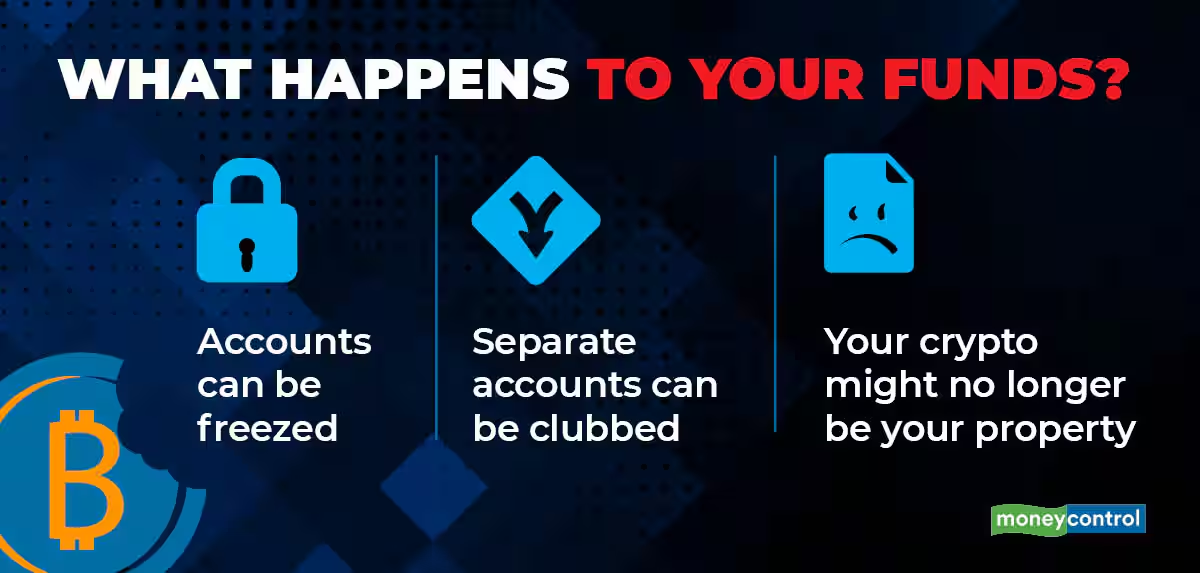
After the exchange is closed, user assets will not automatically reset to zero, but the amount displayed in the account does not necessarily mean how much can be retrieved. If the platform still provides withdrawals, users can usually transfer assets before the deadline; if the platform has become insolvent or entered bankruptcy proceedings, the account balance may be converted into assets or legal claims that need to be confirmed and distributed before they can be retrieved.

After the exchange closes, assets usually have four outcomes
The closure of an exchange does not necessarily mean bankruptcy. Some platforms will announce the timetable for stopping trading and withdrawals in advance, some platforms will only temporarily suspend services, and some platforms will enter court bankruptcy or liquidation procedures due to funding gaps.
| Platform status | How user assets may be | Response methods |
| Orderly shutdown | Withdrawals can still be made normally before the deadline | Close positioning and transfer assets as soon as possible |
| Suspension of withdrawals | The balance continues to show, but cannot be transferred out temporarily | Save account records and wait for official announcements |
| Cease operations | Automatic withdrawals are turned off, and applications are switched to manual review. | Submit identity information and save tickets |
| Formal bankruptcy | Account balances may be converted into legal claims | Declare claims through a designated system |
Therefore, when encountering the suspension of exchange services, the first thing to do is to confirm the status of recharge, trading, withdrawal, and website login, instead of judging that assets have been lost based solely on rumors of “exchange collapse”.
Do the coins placed in the exchange still belong to you?
After users purchase Bitcoin, Ethereum, or stablecoins on the exchange, the account page will display the corresponding balance, but these numbers usually belong to the internal ledger records of the exchange. The platform may store the assets of multiple users in the same on-chain wallet and will not establish an independent address for each user.
During normal operation of the platform, users can obtain corresponding assets by submitting withdrawals. However, if the exchange is insolvent, whether the original currency can be directly withdrawn depends on the user agreement, asset isolation method, applicable laws, and court rulings.
Users may ultimately obtain the following results:
- Retrieve the original cryptocurrency.
- Retrieve part of the assets according to a certain proportion.
- Receive cash at the specified price on the specified date.
- Acquire other tokens, company stock or alternative assets;
- Bear part of the loss due to insufficient platform assets.
If the assets have been transferred to a self-custody wallet where the user holds the private key or mnemonic, the closure of the exchange usually does not affect the user’s control over these on-chain assets.
How will user funds be handled after the exchange goes bankrupt?
After the platform enters bankruptcy proceedings, the ordinary withdrawal entrance is usually closed. The court, liquidator, or bankruptcy management agency will verify the remaining assets, user balances, loans, wallet addresses, and other debts of the platform before deciding on an asset distribution plan.
The balance in the user account may be converted into a claim. Afterwards, it usually goes through the following process:
- Publish bankruptcy cases and debt declaration website.
- User completes identity verification and checks account balance.
- Users submit or confirm claims before the deadline.
- The administrator handles balance objections and duplicate declarations.
- The court approves the restructuring or liquidation plan.
- Users receive cash, cryptocurrency, or other assets according to the plan.
The whole process may take several months or even years. Being able to log in to the platform webpage does not mean that users can still withdraw money at any time; not being able to use the withdrawal button does not mean that all assets have disappeared.
What happens to different types of assets?
Spot assets
Bitcoin, Ethereum, and stablecoins in spot accounts may be normally withdrawn, temporarily frozen, or included in bankruptcy asset distribution. Whether users can retrieve their original currency depends on whether the platform retains sufficient assets and how the bankruptcy plan handles customer balances.
Fiat balance
Fiat currency balances are not necessarily automatically protected by bank deposit insurance. Users need to confirm whether the funds are actually stored in customer segregated accounts of regulated banks and whether local laws provide corresponding protection.
Even if the exchange claims to cooperate with banks, it does not mean that all customer balances will receive deposit insurance compensation when the exchange itself goes bankrupt.
Contract and leverage positioning
Platforms that shut down in an orderly manner usually stop increasing positioning first, only allowing users to reduce positions, and then force position squaring on the final date.
If the exchange suddenly goes bankrupt, contract margin, unrealized profits, and funding fees may need to be recalculated. The profits displayed in user accounts may not be immediately converted into withdrawable assets.
Pledges and wealth management products
Pledges, loans, and wealth management products may have been lent to third parties, invested in on-chain protocols, or locked in verification nodes by the platform, so the processing time is usually longer than that of ordinary spot goods.
Even if the platform resumes spot withdrawals, it does not mean that financial products can be redeemed synchronously. If the product is essentially users lending assets to the platform to earn interest, users may be regarded as creditors after the platform goes bankrupt.
Platform coin
Exchange-published platform coins may continue to exist on the blockchain, but as exchanges close, their fee incentives, staking, voting, and platform usage scenarios may disappear, and liquidity and prices may also drop significantly.
The existence of on-chain tokens does not mean that they can still be sold at the original price.
Can you get your money back if the exchange goes bankrupt?
It is possible, but not guaranteed. Users may retrieve the full amount, partially retrieve it, wait for years to retrieve it in batches, or may not be able to obtain the expected amount due to insufficient platform assets, failure to declare debts in a timely manner, or lack of evidence.
Whether the funds can be recovered mainly depends on:
- How many distributable assets are left on the platform?
- Whether user assets are isolated from company funds.
- How does the user agreement define asset ownership?
- Whether the user completes the debt declaration on time.
- Which date does the court use to calculate the asset price?
- How long does it take to recover assets and handle litigation?
For example, in some bankruptcy cases, claims are calculated based on the fiat currency price on the day the exchange applies for bankruptcy. Even if the user ultimately recovers the entire amount of confirmed claims, it does not mean that the cash can buy back the original amount of Bitcoin.
Why do some people get their cash back while others get their original currency back?
After the exchange goes bankrupt, whether to use cash or original currency for payment depends on the remaining assets of the platform, the bankruptcy area, the court-approved plan, and the payment method registered by the user.
The FTX case mainly confirms customer claims and distributes funds through formal bankruptcy procedures; Mt. Gox provides different payment methods such as Bitcoin, Bitcoin Cash, and bank remittances.
This indicates that there is no unified “refund rule” after the exchange goes bankrupt. What assets users receive, at what price, and when they receive them all depend on the liquidator or court announcement.
What should be done after an exchange suddenly closes?
- Save account balance
Immediately intercept total assets, spot balances, wealth management products, margin, unpositioned squaring contracts, and sub-account balances.
Screenshots should retain the website domain name, account number, and time, but when sent externally, cover the email, phone number, and identity information.
- Export transaction records
Priority export:
- Recharge and withdrawal records;
- Spot and contract transaction records.
- Pledge, loan, and financial management records.
- Account statement;
- Record of handling fees and funding rates.
- Realized and unrealized gains and losses.
- Preserve on-chain evidence
Record recharge address, withdrawal address, blockchain network, transaction hash, transfer time and amount.
On-chain records can prove that a certain transfer did occur, but cannot independently prove how much the exchange ultimately owes the user. Therefore, account screenshots and transaction records are also required.
- Check if the withdrawal is really on the chain
The withdrawal page displaying “submitted” or “processing” does not mean that the transaction has been broadcast to the blockchain.
Only after generating a transaction hash can users query the real state in the blockchain browser. Without a transaction hash, assets may still remain within the platform.
- Find the official debt declaration entrance
If the exchange has gone bankrupt, it should enter the debt declaration system from the court, liquidator, bankruptcy management agency, or official announcement of the exchange.
Do not click on search ads or “priority compensation” links sent by strangers.
- Beware of secondary fraud
After the exchange goes bankrupt, scammers may impersonate customer service, lawyers, or liquidators and demand that users pay unfreezing fees, deposits, or taxes.
Any “asset recovery service” that requires passwords, verification codes, private keys, or mnemonics should be considered high-risk information.
Which evidence is the most important?
| Evidence | Can prove anything |
| Registered email and identity verification information | Who does the account actually belong to? |
| Account balance screenshot | Number of assets displayed before closing |
| Official account statement | Account balance recognized by the platform |
| Recharge and withdrawal records | The flow of funds between users and the platform |
| Blockchain transaction hash | On-chain transfer does happen |
| Transaction and financial records | Balance changes and product attribution |
| Customer service tickets and emails | The user has submitted a withdrawal or balance objection |
| Closure and bankruptcy announcements | Processing procedures and deadlines published by the platform |
Simply saving account screenshots is usually not enough. Users should also keep original statements, transaction records, emails, tickets, and on-chain evidence.
How to reduce the risk of exchange collapse?
- Do not put all long-term held assets on the exchange.
- Separate transaction funds from long-term savings assets.
- Do not concentrate all assets on the same platform.
- Regularly conduct small withdrawal tests.
- Regularly export account and transaction records.
- Understand the difference between spot accounts and wealth management accounts.
- Verify the operating entity and registered area of the exchange.
- Be cautious when using high-yield and long-term locked-in products.
- Learn to use self-custody wallets correctly.
- Do not disclose the private key or mnemonic to anyone.
Self-custody can reduce the risk of exchange freezing, misappropriation, and bankruptcy, but it will transfer the risk of private key custody and transfer operations to the user himself.
FAQs
The exchange has gone bankrupt, do the coins inside still exist?
It may exist in the on-chain wallet controlled by the exchange, or it may only be an account record on the platform’s internal ledger. Whether it can be retrieved ultimately depends on the actual assets held by the exchange and the legal processing plan.
Can I still withdraw money after the exchange is closed?
Orderly shutdowns usually retain a period of withdrawal time; platforms that suddenly stop operating or enter bankruptcy proceedings may suspend withdrawals and require users to declare claims.
How long does it take to get the money back after the exchange goes bankrupt?
There is no fixed time. Orderly shutdowns may only take a few days or weeks, while complex bankruptcy cases may last for years.
Can I still get compensation if I haven’t declared my creditor’s rights?
Not necessarily. Some procedures allow for supplementary or delayed declarations, while others limit the distribution rights of overdue creditors. Therefore, it is necessary to check the specific declaration deadline for each case.
Will the compensation be in the original currency after the exchange goes bankrupt?
Not necessarily. Users may receive original currency, cash, stablecoins, company stocks or other assets, and may also convert their claims at specific date prices.
Will self-custody wallets be affected by exchange closures?
As long as the user independently holds the private key or mnemonic, the closure of the exchange usually does not affect the on-chain assets in the wallet. However, the user needs to bear the risk of losing the private key, incorrect transfer, and authorization.